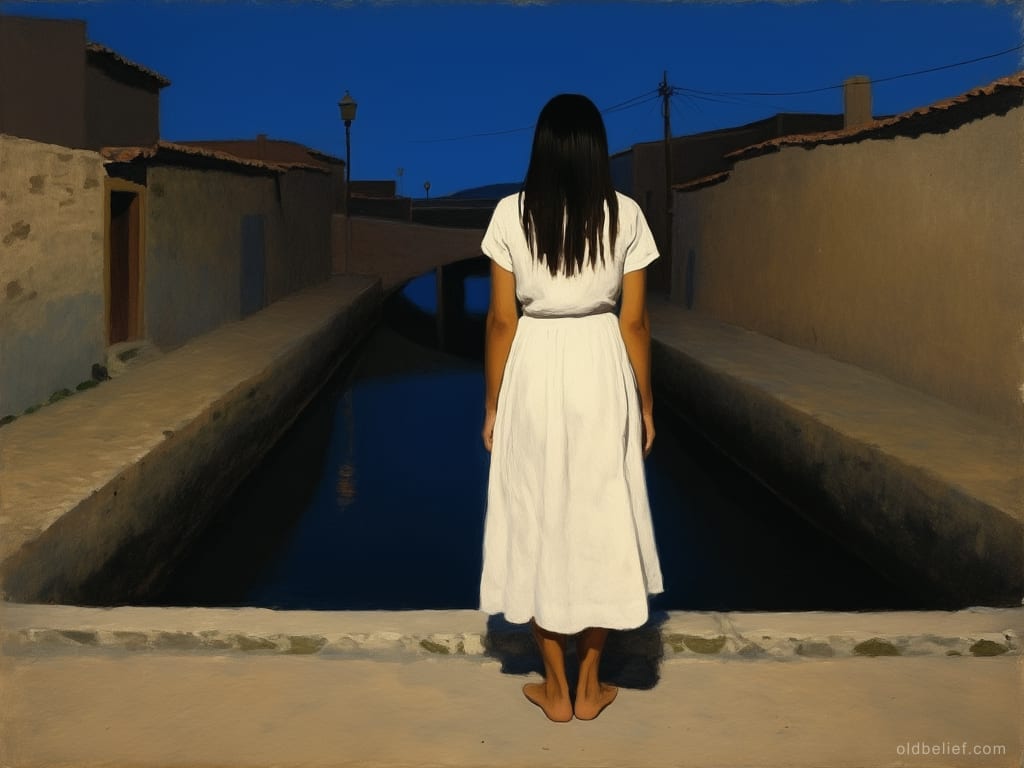
She is turned away because that is how she is met. The crying arrives first, and by the time anyone looks up she is already facing the water.
Basis: Mexican accounts of La Llorona · AI-generated
About the La Llorona
The weeping woman of the water's edge, heard before she is seen: a modern legend carrying an ancient reputation it did not earn.
Bernardino de Sahagún, Florentine Codex: General History of the Things of New Spain, Book 12 (1577)The sixth of the omens said to precede the Conquest: a woman's voice heard weeping at night for her children. This is the earliest text usually connected to the legend, and what it contains is an omen, not the legend.
Frances Toor, A Treasury of Mexican Folkways (1947)Early popular collection. Evidence for what was circulating in the first half of the twentieth century, not an analysis of where it came from.
Bess Lomax Hawes, La Llorona in Juvenile Hall (1968)Fieldwork among girls in a Los Angeles juvenile detention facility, recording how they told the story and what they used it for. Rare evidence of the legend in actual use rather than in retelling.